
Homepage - do not delete
The Device Materials group was founded by Prof. Jan Evetts in 1962. It aim was and still it to develop materials for device applications.
The group started with superconductivity, it expanded to magnetism and then to a much wider variety of functional materials. This natural evolution to encompass a broader range of materials happened because of the enormous range of important functionalities that have emerged over the last 60+ years. Underlying the functionalities and eventual device fabrication is a deep understanding of the science and the development and engineering of materials. This is at the heart of what we do.
The group has created hundreds of researchers over its time, many of them holding eminent academic positions all over the world. We are very proud of their achievements and cognizant of how the group and the shared facilities played a part in their success.
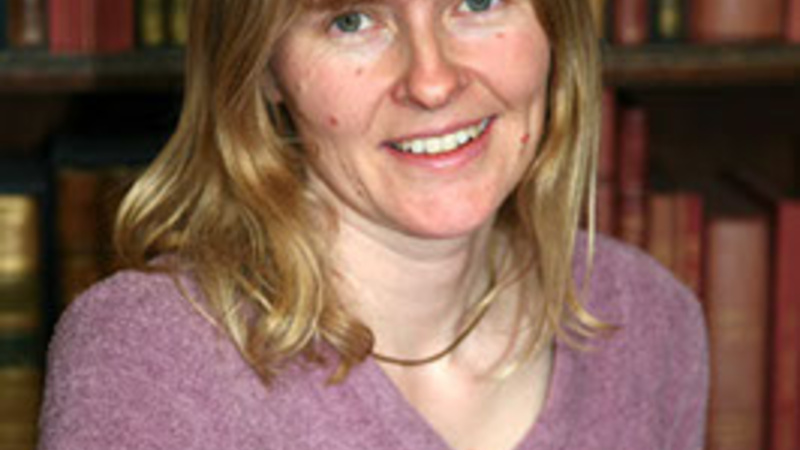
Prof Driscoll’s group works in the area of Oxide Energy Materials And Electronics based on advanced thin films. Oxides are of interest as they possess the whole range of materials functions, all the way from insulators to superconductors (with ferroelectrics, semiconductors, and magnetic materials, and a range of other functions in between). In the vast majority of cases, they are environmentally stable and benign. There are a large number of possible applications: energy-efficient non-volatile memory, oxide energy devices, superconducting materials.
To find out more about Driscoll Research Group, please see here: https://driscoll.msm.cam.ac.uk

Prof Kar-Narayan's group develops novel functional nanomaterials and devices for applications in energy, sensing and bio-medicine. They use a range of fabrication and characterisation techniques, ranging from advanced nanoscale characterisation methods to scalable solution-based nanofabrication to microscale additive manufacturing methods. They work in close collaboration with industrial and clinical partners to develop new and innovative materials and device solutions to existing problems.
To find out more about Kar-Narayan Lab, please see here: https://www.kar-narayan.msm.cam.ac.uk
Dr Hellenbrand works on materials deposition, device fabrication, and electrical characterisation of ferroelectric and resistive switching devices for memory and in-memory computing applications. He has particular interest in CMOS-compatible materials such as hafnium oxide, zirconium oxide, and silicon oxide. For these materials, he is investigating both fundamental properties and large-scale integration. Dr Hellenbrand is a founder and co-director of the Cambridge Centre for Neuromorphic Materials with the aim of fostering technology co-development across the technology co-development across the technology stack of future memory and computing technologies.
To find out more about Cambridge Centre for Neuromorphic Materials, please see here: https://www.neucam.msm.cam.ac.uk

Dr Abin Varghese is broadly interested in nanoscale devices and thin films for various applications. The focus of his current research is oxide-based electronic devices for neuromorphic and in-memory computing.